
chainsaw caoineadh
a haiku sequence

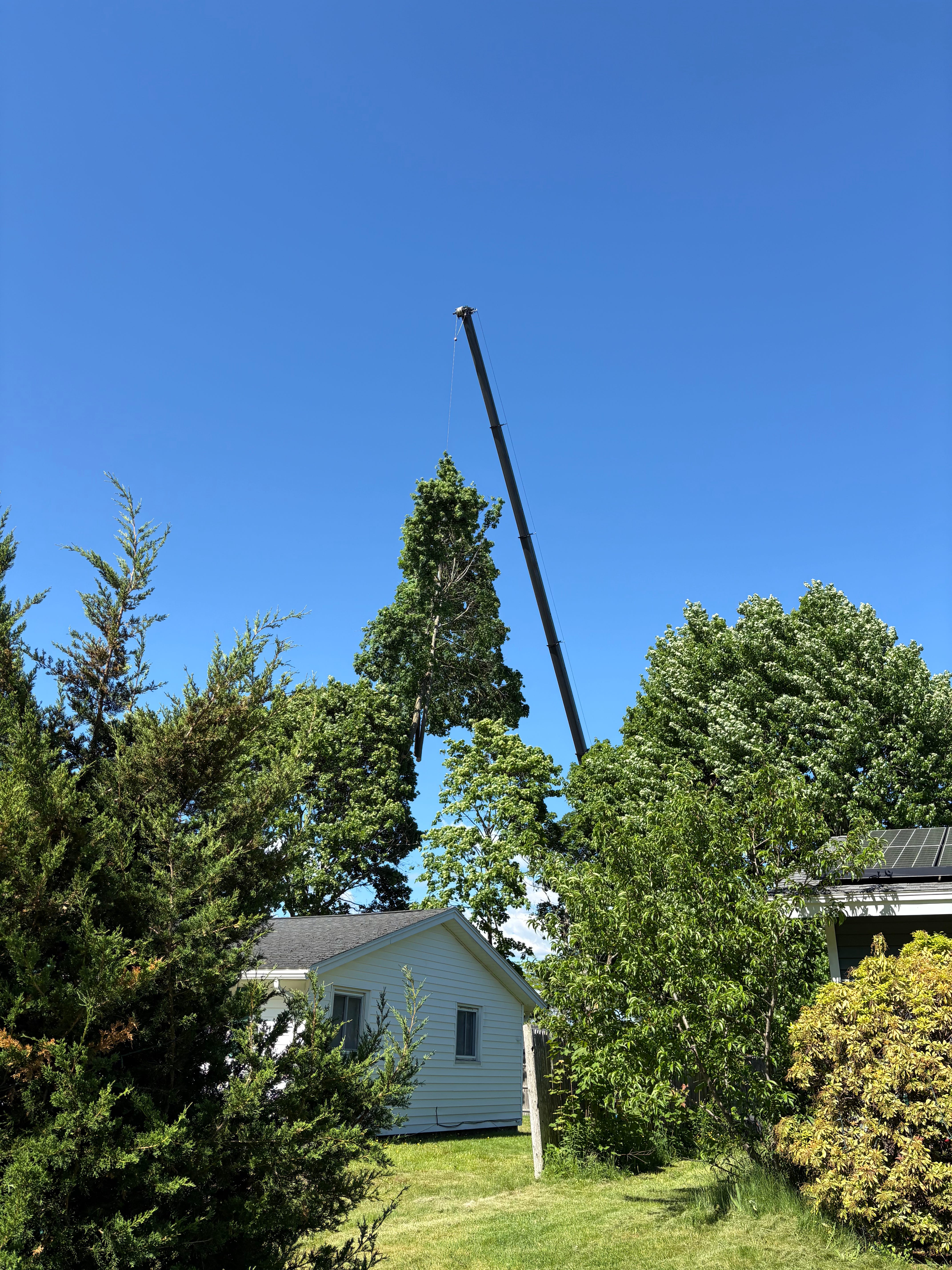
chainsaws
chainsaws cutting through
the morning birdsong

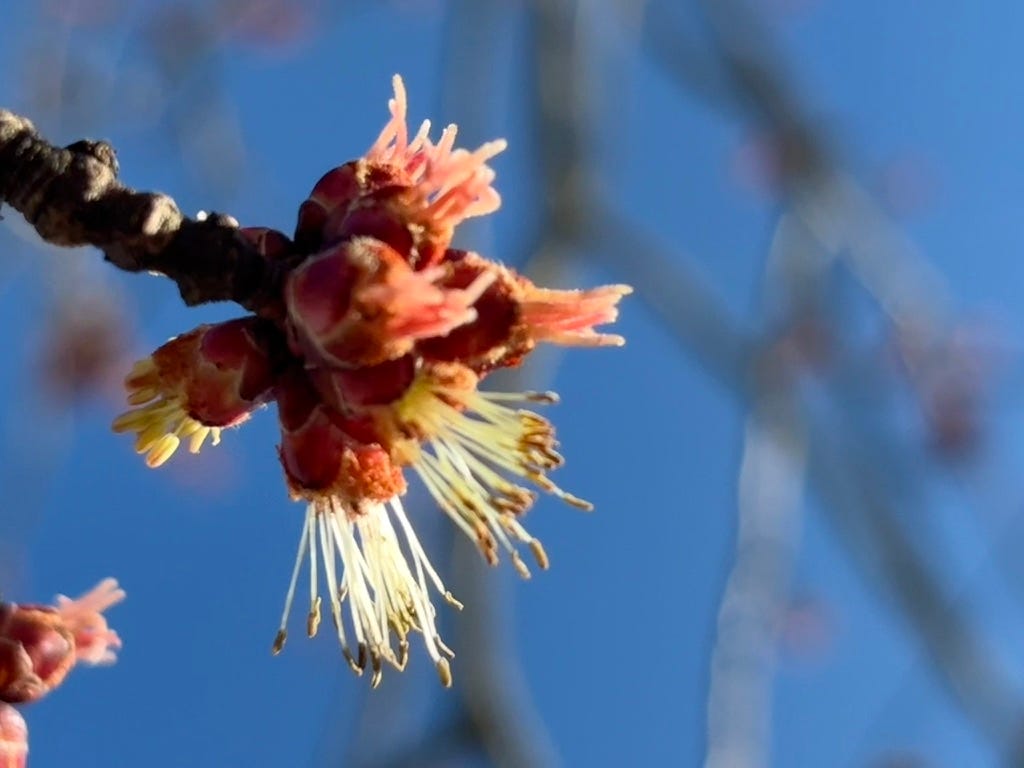
and the maple crown
floating impossibly up
over the treetops

one by one by one
the great trees go, groaning
into the roaring maw

the chipper devours
rustling winds, shady noontimes,
and the dawn chorus

bewildered starlings
congregate, wondering where
their nests have gone

robins' serenades
become dirges, starlings
caoineadh, catbirds cry

and the engines
of destruction drone their bass
growls long after leaf-fall

and no one thinks
to plant new trees to give shade
to their grandchildren
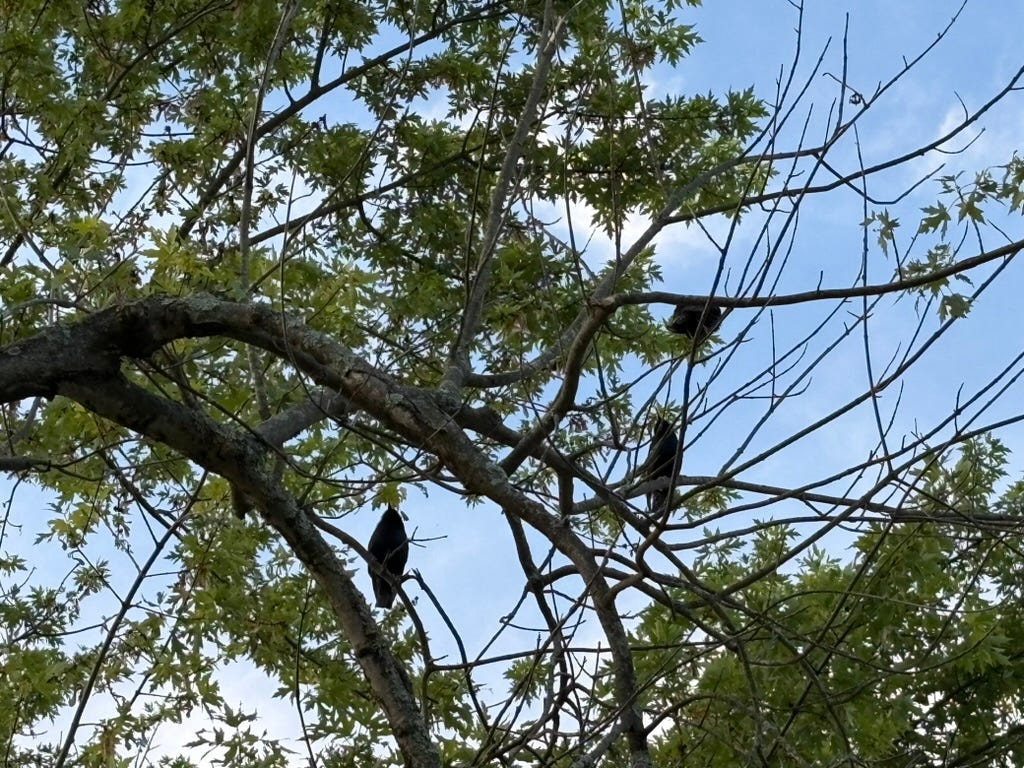
This poem has been brewing in my head for a while.
A caoineadh, or keen in English, is a traditional Irish lament for the dead. The most famous caoineadh is the Caoineadh Airt Uí Laoghaire by Eibhlín Dubh Ní Chonaill.
In form my poem really has nothing to do with an Irish caoineadh. And yet I’ve been haunted by the form since reading Irish poet Doireann Ní Ghríofa’s memoir, A Ghost in the Throat. Ni Ghriofa also writes about starlings in that memoir and in her delightful poem, “at half eleven in the Mutton Lane in, I am fire, slaughter, dead starlings”.1 2
This poem has been brewing.
We live in a neighborhood that was built in the 1950s. Before that this land was a farm. And long before that it was wild woodlands. Wherever humans stop ruthlessly cutting back the trees, empty lots tend to revert back to woods. Our local forests are young and criss-crossed with stone walls. Once those grounds too had been cleared for farming. But when we stop clearing the trees, the forests return.
All the roads in our neighborhood are named for the members of the family who last farmed this land. Now there are rows of Campanelli houses.
All the trees that were planted by the builders or original owners are now getting old. Some of them are likely in their 70s. So it’s understandable that some of them have to come down. But no one is planting new trees and gradually our neighborhood which was once tree-lined and shady has been transformed. All the lovely maples and pines, locusts and catalpas are going. And my heart grieves each time we lose another tree-friend.
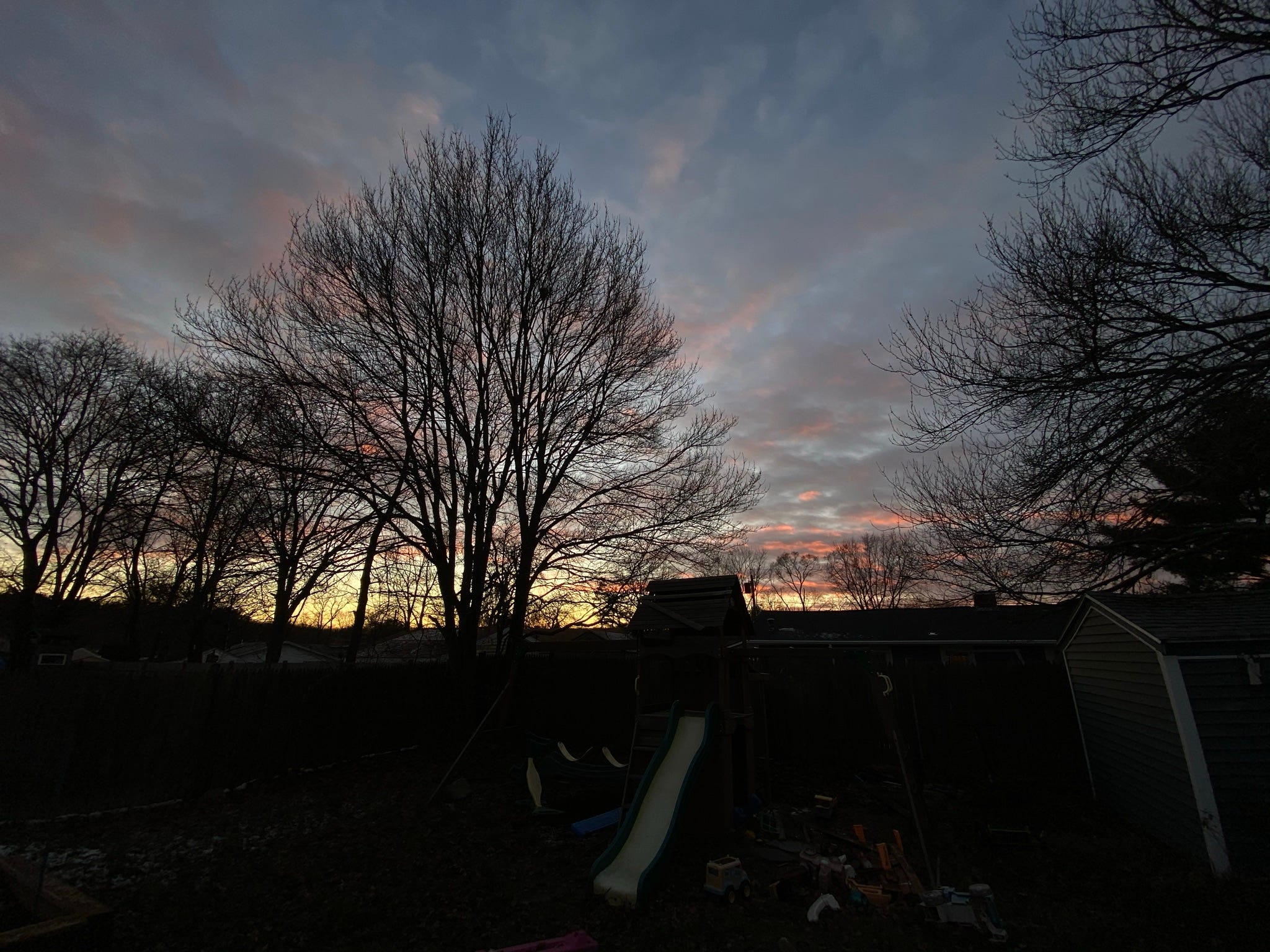
This poem has been shaping itself in my head like storm clouds gathering.
Yesterday morning I took a walk with my second daughter. By the time I took an evening walk the great silver maple on the corner of the block was gone. Only a stump left. And the starlings that nested there… sitting on a wire nearby. Yes the tree was old and needed to go. In a spring storm it dropped a large branch that took out a section of fence and part of the gutter on the house and narrowly missed knocking a hole in the roof. But now there is another gap.
This morning I watched as the neighbors behind and to the side of us took down a whole row of maple trees along their back fence. Another hole in my heart, another blank spot on the horizon that was just yesterday filled with leafy branches.
This poem is a gathering storm.
Last year our next-door neighbors took down the locust that shaded my bedroom window. And the people behind us took down the white pine that I could see from my kitchen window while washing the dishes. Every one of these trees has a story. For some of them I have poems as well.
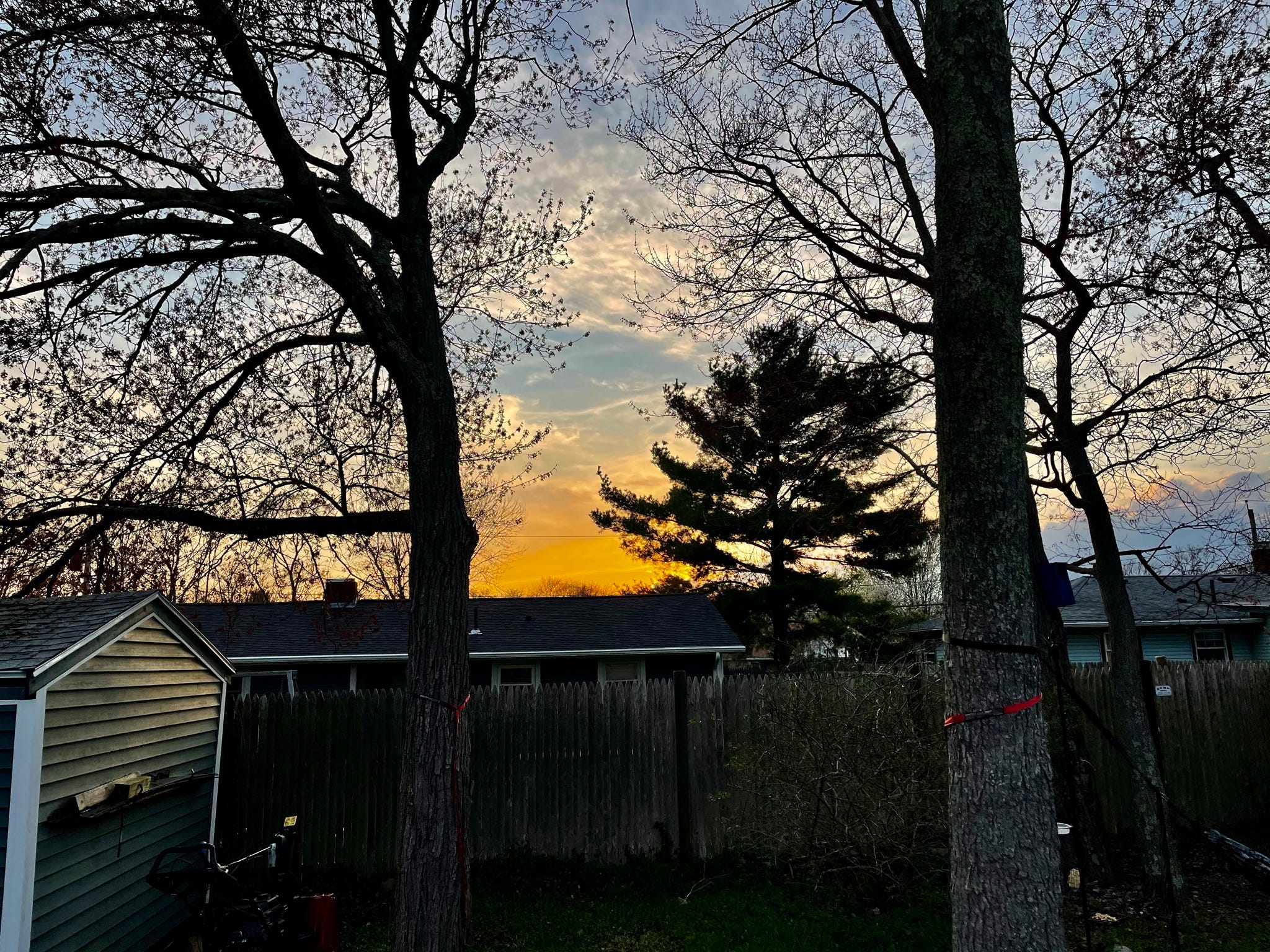
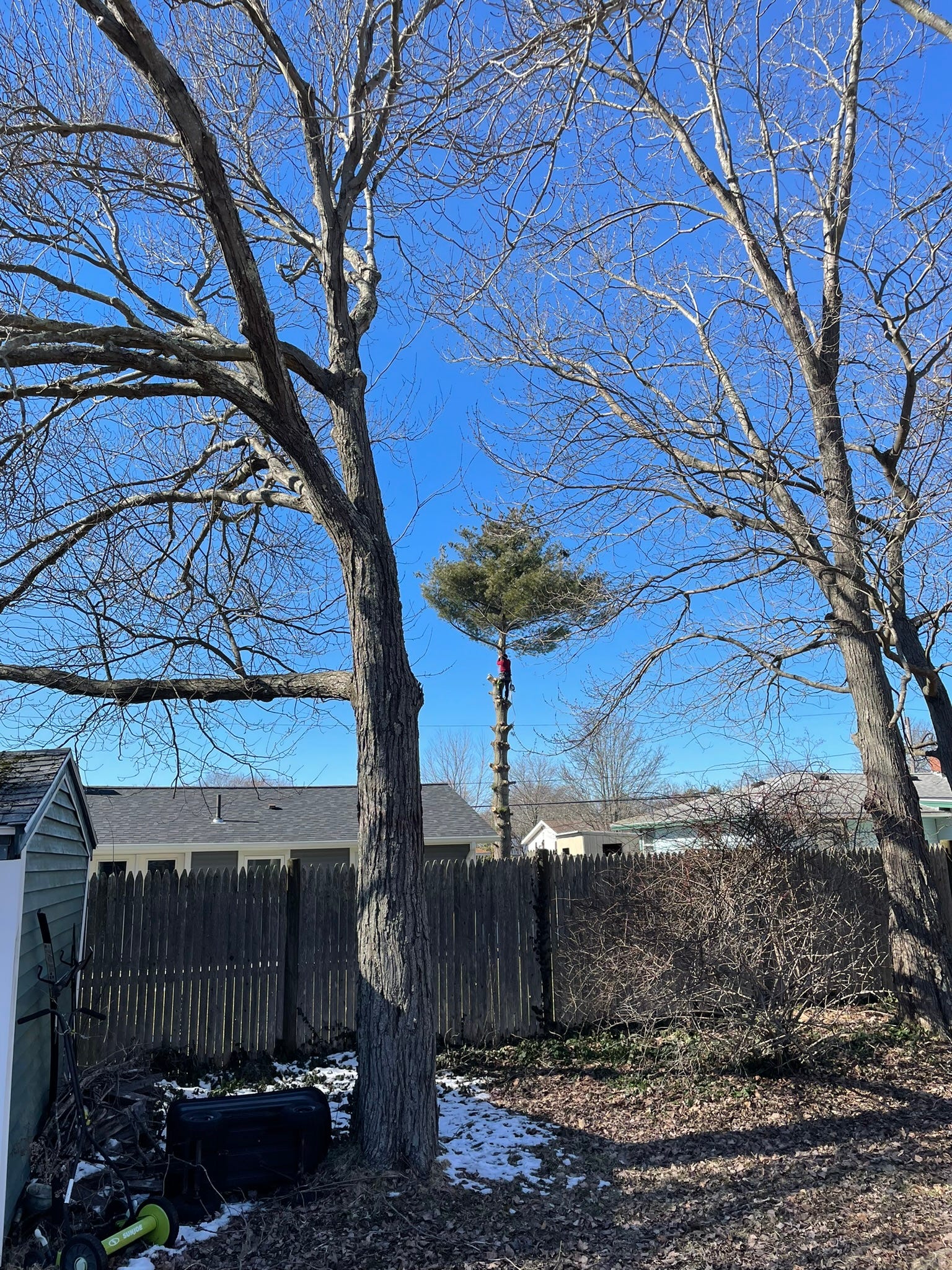
MK Creel recently linked to this essay by Sam Harrelson: On Noticing a Tree Being Cut Down. Harrellson’s essay echoed the lines that have been forming in my head, in my heart. Perhaps it helped to give them this particular shape as well.
Yesterday’s chainsaw chorus and dirge also reminded me how physically visceral tree removal feels. The sound really bypasses abstraction. You feel it in your chest. The vibrations travel through walls and windows with an alarming thud when a solid and alive oak lands suddenly. It unsettles birds, and dogs bark differently. Even the light changes almost immediately once a canopy disappears. A yard that felt sheltered in the morning suddenly feels exposed by afternoon.
There is a phenomenology to tree loss that environmental discourse often misses. We talk about carbon sequestration, heat islands, runoff mitigation, biodiversity, and property values. All of those matter, obviously. But there is also the immediate lived experience of absence. A street feels different when older trees disappear. The scale of things changes. Time itself feels altered. Older trees bring a sense of temporal depth to neighborhoods. They silently witness generations.
Edith Stein’s work on empathy comes to mind, especially her insistence that perception is never neutral. To perceive another being as alive requires a kind of openness that exceeds utility. Perhaps ecological intentionality begins precisely there... in learning again how to perceive the more-than-human world not as scenery or resource but as neighbor.
Harrellson continues:
I do not know why those particular trees were cut down. Maybe there were entirely legitimate reasons (the house was recently purchased, and I haven’t met our incoming neighbors yet). Maybe the owners had worried about storm damage, roots, or decay. I’m not interested in condemning neighbors from across the street by any means.
But I do think the question matters.
Because every removed tree reveals something about how we imagine our relationship to place. Whether a yard is merely owned space or a shared habitat. Whether shade is an inconvenience or a gift. Whether we understand ourselves as managers, stewards of landscapes, or participants in living ecologies.
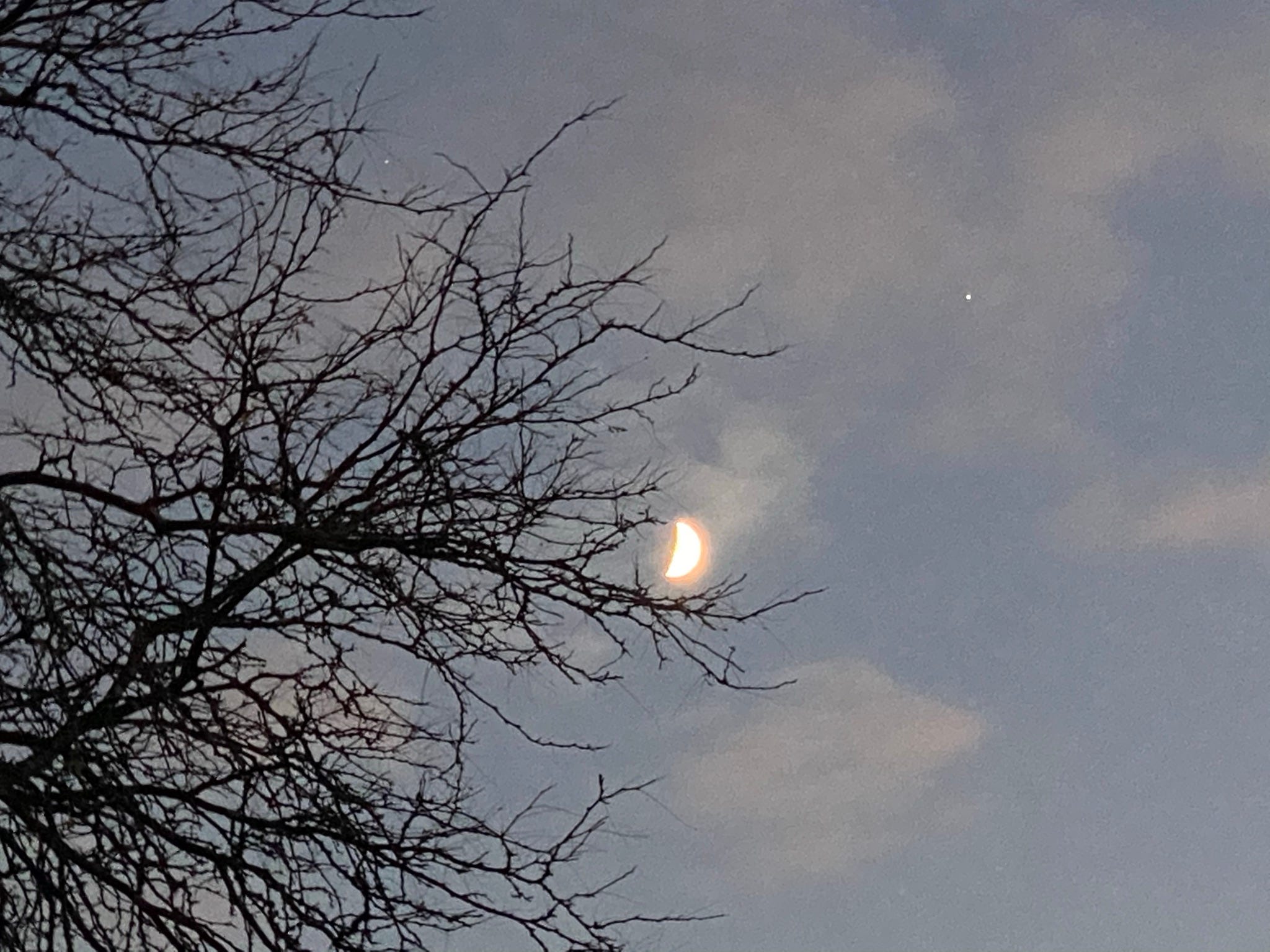
I am not finished lamenting for the trees. I could write whole books about them. I likely will. The trees are my friends, living beings who shared my neighborhood. They were neighbors. I miss them.
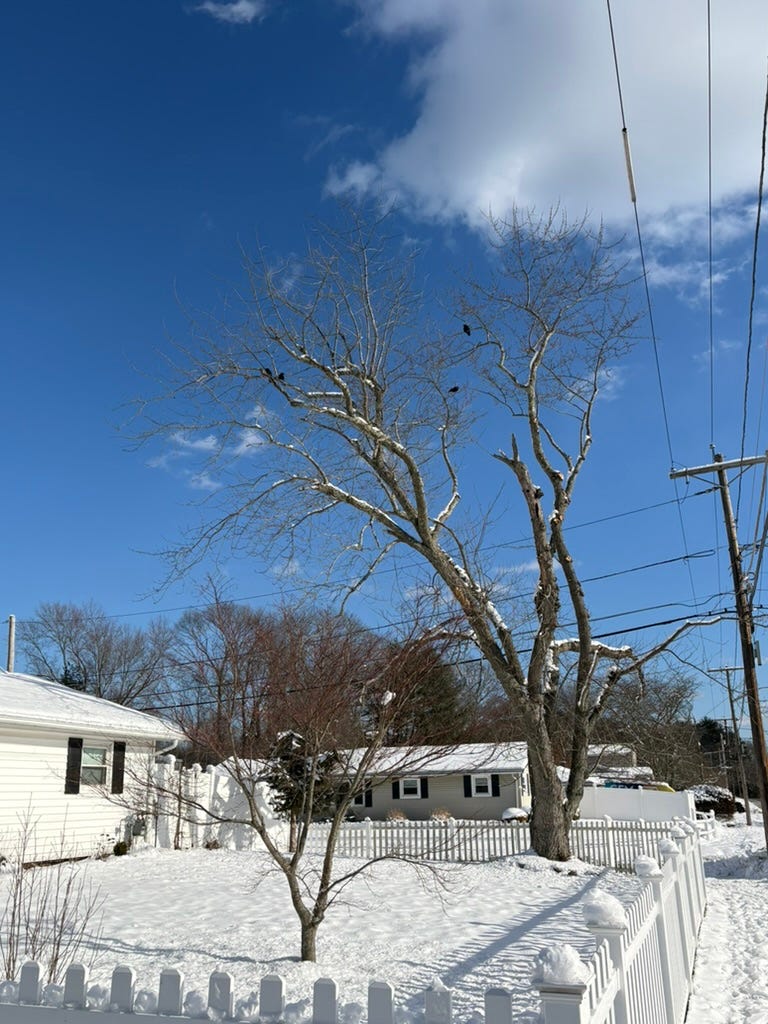
I would love someday to found a non-profit organization that will help individual homeowners plant new trees when old trees must be cut down. I have no idea how to go about doing such a thing. But every time a tree goes down, it not only hurts my heart, it also fills me with a desire to DO SOMETHING. I want to find some way to enable people to plant a new one it its place. I want to be able to give them a tree.


Listen to Ní Ghríofa’s reading here: https://irishartscenter.org/videos/irish-arts-center-poem-of-the-week-doireann-ni-ghriofa
And see Benjamin Collopy’s excellent podcast about the poem here:
Thank you, for the poems and for the lyric essay about the trees.
Three days ago, a large tree across the alley from my writing studio was cut down.
I closed my window again the howl of the chainsaw and the growl of the chippers.
The tree had no such defense.
Sharing in your mourning. Nothing made me sadder as a child than when the forest near our house was plowed under for a new development. I still miss that forest. We have a large oak tree in our front yard that is losing branches regularly. One large limb apparently fell last year and closed the street for a few hours. I'm afraid it is nearing the end of its life, but I can't bear to think of removing it.